Blog
Dental hygiene tips for healthy teeth & gums
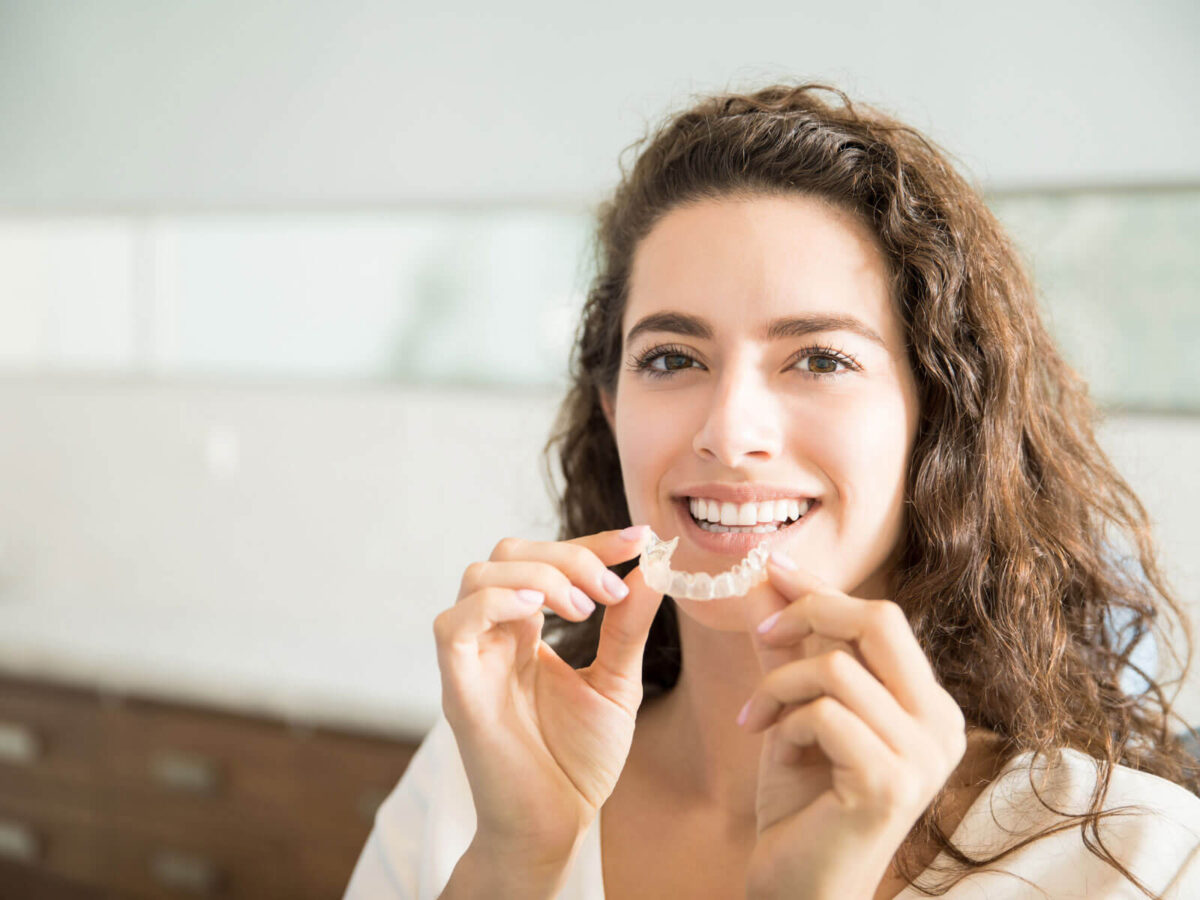
Invisalign for Adults: What to Expect, Cost & Is It Right for You
Invisalign for adults comes up constantly with people who wanted straighter teeth for years but didn’t want visible metal showing up in every meeting or first date in the meantime. Clear aligners solved that specific problem, and adoption has climbed a lot faster than a lot of orthodontic offices expected.
I know a couple of people who started Invisalign in their late 30s, and both gave basically the same reason when I asked: they finally had the flexibility, and the money, to just do it without worrying what a coworker across the conference table might think. Not exactly a dramatic story, but a pretty common one.
TL;DR
Trays instead of brackets, swapped out roughly every one to two weeks. That’s the core of Invisalign for adults, worn 20 to 22 hours a day while the teeth gradually shift into place.
Cost runs $3,000 – $8,000 for most cases. Timeline lands somewhere between 12 – 24 months, depending on how much needs to move.
It’s a good fit for mild to moderate crowding, spacing, and some bite issues. Severe skeletal cases are still likely to need traditional braces instead.
What Actually Is Invisalign
No brackets. No wires. Just a series of clear plastic trays, each one worn for a week or two before swapping to the next.
Cleveland Clinic groups clear aligners like Invisalign alongside traditional braces and retainers as one of the standard paths in modern orthodontics. Every tray in the box is a tiny bit different from the last one, cut just slightly out of alignment with where the teeth currently sit. That small mismatch is the whole trick. It’s what applies pressure and gets things moving.
On its own, one tray barely does anything noticeable. Worn in sequence, week after week, those small nudges are what actually straighten teeth over the course of treatment.
How Is It Actually Different From Regular Braces
The biggest difference is that it comes out. Aligners get removed for eating, brushing, and flossing, a real convenience braces just don’t offer.
That same removability is also the biggest risk. The whole system only works if the trays stay in for close to the full recommended stretch every day, not just when it’s convenient.
How Does Invisalign Treatment Actually Work Day to Day
Treatment starts with a consultation and a digital scan, or sometimes a physical impression, of the teeth. That scan maps out the entire sequence of tray movements before a single aligner gets manufactured.
Seeing that plan upfront, sometimes as a rough animation of how the smile will shift over the coming months, is one of the more satisfying parts of getting started for a lot of adults I’ve talked to about it.
From there, it’s mostly a matter of wearing each tray consistently and moving to the next one on schedule, usually with a check-in every six to eight weeks to confirm things are tracking. Braces come with monthly tightening visits. This schedule is lighter, easier to manage around a normal work calendar.
What Does Daily Life With Invisalign Actually Look Like
Aligners need to stay in for roughly 20 – 22 hours a day to actually work as intended, which leaves a fairly narrow window for meals and cleaning. Roughly two to four hours a day, total, for anything that isn’t water going into the mouth.
Most people figure out the rhythm fast. Eating meals back to back instead of grazing all day becomes second nature, mostly because every removal and reinsertion quietly eats into that daily wear-time budget. I’ve heard people describe it as retraining themselves out of snacking, less a discipline thing and more just a logistics thing once the habit sets in.
Wondering If Invisalign Fits Your Case?
Get a real evaluation from an orthodontist. Find out if you’re a good candidate before committing to anything.
What Does Invisalign Cost for Adults
Invisalign cost for adults typically runs $3,000 – $8,000 for a full course of treatment. Case complexity drives most of that range, along with how many trays a case actually needs. Mild cases involving minor crowding or spacing land toward the lower end. Cases addressing bite issues alongside straightening push things higher.
That range sits roughly in line with traditional braces, though the real comparison depends on the specific case. Dental insurance sometimes covers part of it, especially plans that already include orthodontic benefits, and payment plans are widely available.
Is Invisalign Actually More Expensive Than Braces
Not by much, in most real-world cases. Case complexity drives the price a lot more than which treatment type actually gets chosen.
A severe bite correction costs more than a mild spacing case, full stop, whether it’s handled with aligners or brackets. The materials themselves aren’t the real driver. How much movement the case needs, how many trays that adds up to, and who’s actually running the treatment tend to matter a lot more.
What’s a Realistic Invisalign Treatment Time for Adults
Invisalign treatment time adults should reasonably expect generally falls between 12 – 24 months, though mild cases can wrap up faster and more complicated ones can stretch on longer. Age itself isn’t the deciding factor here. Case complexity and how consistently someone wears the trays matter far more than whether the patient is 25 or 55.
Adults sometimes finish treatment a bit faster than teens do on average. Adult patients tend to be more consistent about wear time day to day. A teenager juggling sports, social pressure, and general forgetfulness can extend treatment through inconsistent wear, while an adult with a steady routine tends to just stick to the schedule.
What Are the Other Adult Orthodontics Options
Adult orthodontics options extend well beyond Invisalign specifically, worth knowing before committing to one path.
Traditional metal braces stay the cheapest fixed option on the table. They also handle more complex cases than aligners typically can. Ceramic braces work as a less visible version of the same fixed-bracket approach.
Lingual braces attach behind the teeth instead of in front, so they’re basically invisible day to day. That hidden placement comes at a cost – more expensive than the alternatives and a longer chair time to get set up initially. Beyond Invisalign, other clear aligner brands exist too, ClearCorrect among them, often priced a bit lower, though material and tray thickness aren’t identical system to system.
How Do You Actually Know Which Option Fits Your Case
Case complexity really drives the decision, more than personal preference. Mild to moderate crowding tends to do well with aligners. Once bite correction, severe crowding, or jaw position enters the picture, traditional braces come back into play, sometimes paired with other appliances to get there.
FAQ
Is it fair to compare Invisalign directly to traditional braces?
For milder cases, generally. Real bite correction is where the gap shows up, and that’s usually still braces territory.
Can clear aligners actually correct a bite, not just crooked teeth?
Sometimes, and more often than it used to. The tech’s caught up on some bite issues, but the worst ones typically call for traditional treatment instead.
What happens if aligners aren’t worn enough each day?
Progress slows, sometimes drifts off course entirely, and correcting that can mean a whole new set of trays. With aligners, wearing them consistently is basically the whole job.
Do adults need a retainer after Invisalign?
Yes, no way around it. Teeth drift back toward where they started without one, no matter how they got straightened in the first place.
Conclusion
Invisalign for adults has become a practical option for people who spent years quietly assuming metal braces just weren’t realistic at this stage of life. For the right case, mild to moderate crowding or spacing especially, it delivers results comparable to braces with a lot more day-to-day flexibility.
The only real way to know if it fits a specific case is an actual consultation. Complexity varies a lot person to person, even when the surface problem looks similar at a glance.
Ready to Find Out If Invisalign Fits Your Case?
Book a real consultation and get a straight answer. We’ll walk you through what makes sense for your specific mouth.